This page is currently available in Russian only.
 The Emperor · Esoteric Portal
The Emperor — Tarot Card Meaning
The card’s overall meaning and symbolism
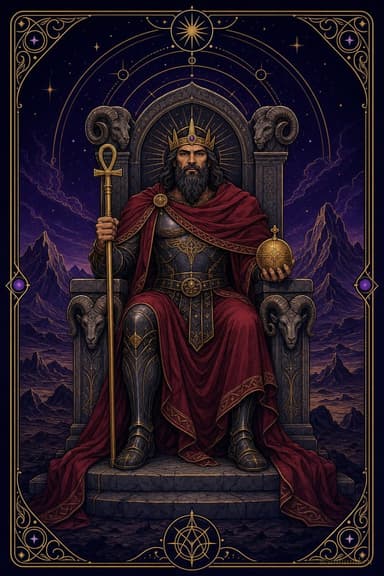
In the Waite deck, we see a gray-haired, bearded man seated on a stone throne adorned with ram heads, wearing a red robe over armor. In one hand he holds an orb, a symbol of the sphere of power; in the other, a scepter topped with an ankh, the sign of life and authority over it. Behind him rise harsh, barren mountains, speaking of firm decisions and resilience, but also of emotional reserve—under this rule, tenderness does not flourish. The image is not an abstract archetype of strength, but a specific figure of authority who establishes order and protects boundaries.
This card matters because it reveals the architecture of a situation: who sets the rules, who builds the system, and who is responsible for the consequences. The Emperor is not simply a “strong person”; he is the principle of structure: laws, responsibility, duty, and pragmatism. The symbols—the throne, armor, ram horns, orb, and ankh—help distinguish where the logic of power is truly at work and where there are only outward displays of strength.
Upright meaning
Upright, The Emperor speaks of stability, clear boundaries, and control. If he appears next to a specific person in a reading, you are dealing with someone who makes decisions, assigns responsibilities, and expects discipline. In business, this may be an owner, manager, or mentor who keeps operations on track and expects accountability. In everyday matters, the card points to the need for a firm schedule or more order: sort out the budget, plan a renovation, or set rules for children.
The Emperor represents structure: contracts, frameworks, and clear agreements. It is a card of solid foundations—signing documents, introducing procedures, formalizing relationships. It also brings protection: rates are insured, assets are under control, and someone is accountable. For example, if you want to launch a project, The Emperor advises you to create a plan and budget, assign responsibilities, and follow established procedures.
Reversed meaning
The reversed Emperor warns of abused power and rigidity. Here, authority has turned into tyranny: orders are given without explanation, initiative is restricted, and creativity is stifled. In a family, this can be a tyrannical father; at work, a boss who uses control to boost their own ego. Often, the card points to a loss of control: the system has become so distorted that the person running it no longer sees reality.
It can also signal your own inflexibility—when you hold a situation too tightly, push people away, and lose the ability to adapt. Financially, this may mean harsh loan terms, domineering negotiators, or decisions you make yourself while ignoring the risks. Reversed, The Emperor asks you to consider whether you are turning protection into punishment and sacrificing human connection for an illusion of stability.
In a love and relationship reading
In love, the upright card directly points to the structure of a relationship: a stable union, defined roles, and clear commitments. It may represent an older partner who takes responsibility or someone proposing to make the relationship official. If you are looking for support, The Emperor is favorable: he brings protection and order.
Reversed, it warns of control, jealousy, and pressure. A relationship in which one person dictates the rules and disregards their partner’s feelings is destined for conflict. The card’s advice is either to establish boundaries and rules honestly, or to step away from toxic authority and restore balance.
In career, finance, and personal-growth readings
At work, The Emperor is a sign of sound management: build a structure, assign responsibilities, and document processes. For career growth, it can indicate a leadership role or the need to develop leadership skills—the ability to make difficult decisions and not fear responsibility. In finances, it favors careful, well-considered asset management and investments made according to a plan.
For personal growth, The Emperor calls for discipline: routines, habits, delegation, and planning. But make sure discipline does not turn into cruelty toward yourself or others. Ideally, you take the card’s strength—order and responsibility—without losing flexibility or humanity.