This page is currently available in Russian only.
 The Fool · Esoteric Portal
The Fool — Tarot Card Meaning
The card’s overall meaning and symbolism: what it shows and why it matters
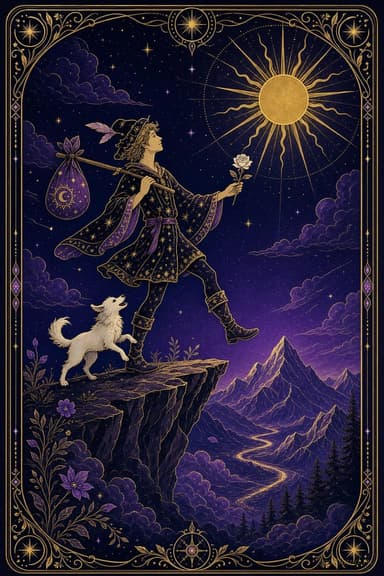
The Fool is depicted as a young traveler standing at the edge of a cliff: he holds a white rose, carries a small bundle on a stick over his shoulder, and is joined by a playful white dog. Above him shines a bright sun, with mountains in the distance. This scene is more than an image of madness—it is a visual manifesto of beginnings. The white rose speaks of pure intentions and freedom from calculation; the bundle suggests carrying only the essentials and being ready to travel light; the dog is instinct, perhaps urging him on, perhaps warning him; the cliff is the boundary between the past and the unknown.
It is important to understand that The Fool is not simply “inexperience,” but a conscious step into a process. It symbolizes the point at which choice is still open, and faith in the journey often matters more than knowing exactly where it leads. In the Rider–Waite tradition, the card is both neutral and dynamic: it sets a direction without mapping out the route—an invitation to act with your eyes open.
Upright meaning
Upright, The Fool is a card of new beginnings and spontaneity. In practical terms, it can point to a sharp career change, an unexpected trip, the start of a creative project, or the birth of an idea you are ready to pursue without a rigid plan. In an everyday reading, The Fool may say, “Go ahead, try this experiment,” while warning that too much preparation can kill the momentum.
The Fool also speaks of trusting the journey: a person follows their intuition even when the cards—or circumstances—offer no clear answers. Innocence here is not weakness but pure energy: the ability to begin again after failure. For example, you quit your job to open a café despite having no experience—the card does not criticize you; it reveals the potential of a bold yet sincere initiative.
Reversed meaning
Reversed, The Fool warns of recklessness or stagnation. In one interpretation, it is naivety: blindly trusting people or ideas without checking the facts. In another, it is fear that turns a possible step forward into a missed opportunity. The card can show either a leap without a parachute or endless “what ifs” after the chance has passed.
In practical terms, this may look like delaying a decision out of fear of making a mistake and losing a lucrative contract—or rushing into a risky venture without a financial safety net. Reversed, The Fool asks you to pause and ask: is this inspiration or self-deception? If fear is keeping you silent, it is time to work through your blocks; if recklessness is the issue, add more checks and protection.
What the card means in a love and relationship reading
In love, an upright Fool often signals an unexpected meeting, lighthearted passion, or the beginning of a relationship without heavy expectations. It is an attraction built on playfulness, freedom, and a desire to explore. For someone who is single, it is an invitation to step out into the world without waiting for the “perfect” partner.
Reversed, The Fool in relationships can point to superficiality, fear of commitment, or moving too fast—such as moving in together after only a week of dating. It may mean that one person in the couple is acting immaturely or, conversely, is afraid to make the first move. The result may be either conflict or a missed chance for genuine closeness.
What the card means in readings about work, finances, or personal growth
In a career context, The Fool symbolizes a risky yet promising change of direction: launching a startup, going freelance, or relocating for work. Financially, it suggests trying a new approach—but keeping a Plan B close at hand. On the level of personal growth, the card calls you to experiment, learn as you go, and not be afraid of looking foolish.
Reversed, The Fool in these areas is a warning sign: impulsive investments, ignoring professional advice, or, on the other hand, being too afraid to begin learning and developing. The recommendation is simple: either set sensible boundaries or overcome your fear and take the step—but do it consciously.