This page is currently available in Russian only.
 The Devil · Esoteric Portal
The Devil — Tarot Card Meaning
General Meaning and Symbolism of the Card
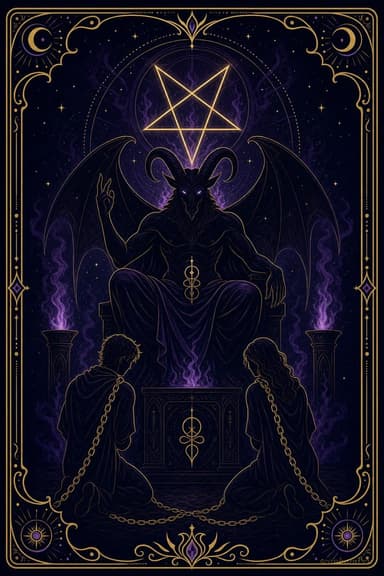
Before us sits a dark, horned figure on a heavy pedestal—an unseen power that appears all-powerful. Above it glows an inverted pentagram, suggesting that the material and instinctive energy in this image has been distorted: the symbols of strength are turned in a way that gives power not to the person, but to fear and attachment. Two small cloaked figures stand chained nearby; they seem to remain in their familiar roles more than they are truly bound—the chains can be removed, yet they stay on their knees out of shame, laziness, or convenience. This card matters because it shows not abstract evil, but specific mechanisms: addiction, temptation, limiting beliefs, and the part of the psyche Carl Jung called the shadow.
Upright Meaning
Upright, The Devil speaks of a trap you have found yourself in: habits that are hard to give up; alcohol, gambling, toxic relationships, or a craving for material comfort that turns you into a slave to your own desires. In a career reading, if the card appears alongside other money cards, it warns of everyday compromises and work where you trade your energy for stability. In everyday life, it is the temptation to set aside serious decisions for instant gratification: a quick flirtation instead of an honest conversation, a loan for status instead of a manageable budget. Psychologically, it points to limiting beliefs—“I am not worthy,” “I am weak”—that disguise themselves as comfort. It is important to recognize that the Devil’s power is an illusion: he strengthens his chains through fear and habit, not through real necessity.
Reversed Meaning
Reversed, The Devil marks the beginning of breaking free. It is the moment when the chains fall away and a bitter yet liberating realization arrives: “I did this not because this is who I am, but because I was afraid of change.” The reversed card often appears after a crisis or during a period of sober self-examination—you see your dependencies objectively and begin taking back control. This is not sudden magical freedom, but gradual recovery: acknowledging the problem, seeking support, and taking small steps away from destructive patterns. Sometimes reversed The Devil warns of relapse—a seemingly harmless weakness may lure you back if new boundaries are not firmly established.
In Love and Relationships
In love, the card sharply reveals one person’s power over the other: jealousy, control, manipulation through guilt or sensuality, and relationships where comfort matters more than honesty. If the card is upright, you may be with someone who exploits your vulnerabilities, or you may be allowing it for the sake of intimacy or security. Reversed, it offers a chance of liberation: recognizing manipulation, beginning therapy, ending a toxic bond, or reconsidering the roles within the relationship. Practical advice: examine who sets the rules in the relationship and which “comforts” are costing you your freedom.
In Work, Money, and Personal Growth
In financial matters, The Devil warns against the lure of easy profit, loans, gambling investments, and work where you sell out your values for money. Professionally, it can point to jobs that make you hostage to their conditions—constant overtime, exploitation, or moral compromise for a paycheck. In terms of personal growth, the card is a challenge: either you acknowledge your own shadow and begin integrating it, or you remain stuck, justifying your fears with endless excuses. The way out is simple and difficult at once: realize where you are dependent and make a concrete plan to leave—small steps, boundaries, and seeking support.