This page is currently available in Russian only.
 The Hanged Man · Esoteric Portal
The Hanged Man — Tarot Card Meaning
General meaning and symbolism: what the card depicts and why it matters
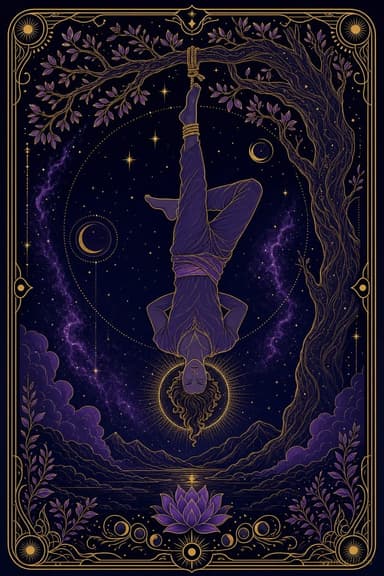
Waite’s Hanged Man is not a victim of violence or defeat, but a pilgrim-hero willingly suspended upside down from a living tree. His pose is calm, untouched by suffering: one leg is bent, his hands are folded behind his back, and a soft golden halo glows around his head. The image speaks of a deliberate choice to pause. He is not falling—he hangs as if floating, and therefore sees what he could never see while standing upright. This shift in perspective is the key to transformation.
The tree is still alive, the branch remains unbroken, reminding us that sacrifice is not inherently destructive. When made consciously, it can be restorative and illuminating. The halo points to wisdom that arrives in the quiet of waiting, while his peaceful expression suggests acceptance rather than torment.
Upright meaning
Upright, the card clearly signals a pause and the need to look at the situation differently. This is more than simply waiting—it is active contemplation. For example, in an argument with a partner, The Hanged Man advises putting your arguments aside and listening for what you have been missing. In professional matters, the card suggests temporarily pausing your momentum to rethink your strategy: a new angle may bring fresh ideas.
It is also a card of conscious sacrifice for the sake of growth. It may mean giving up familiar benefits—time, status, or income—to gain deeper wisdom or long-term value. Finally, The Hanged Man teaches you to release control: trying to force events will only make things worse. It is better to trust the process and accept the unavoidable pause as a tool for transformation.
Reversed meaning
Reversed, The Hanged Man often points to resistance to a necessary pause and to stagnation that is not healed through inner acceptance, but merely prolonged. This is the state of being stuck while refusing to change perspective—afraid of losing status or recognition, and therefore enduring pointless losses.
The card can also warn of meaningless sacrifice: you are giving away resources not for growth, but out of guilt or panic. Or perhaps delay has become a habit: you keep waiting for the “right moment,” which never arrives, and in doing so miss the chance to move forward for real.
What the card means in a love and relationship reading
In love, The Hanged Man calls for a pause and a rethink. At the beginning of a relationship, it may invite you to slow down so you do not project the past onto your partner. In established couples, the card suggests consciously changing your perspective: look at the role you have grown used to playing and, perhaps, shift the relationship dynamic to help the bond grow.
Reversed in a love reading, it often indicates self-sacrifice that no longer leads to growth: someone is abandoning themselves to preserve the relationship. It may also point to being stuck in a conflict because both people are afraid to take a step back and see the real issue.
What the card means in readings about work, finances, or personal growth
At work, The Hanged Man advises you to pause and review your methods: investments of time and money can be redirected if you change your approach. This does not necessarily mean leaving your job; often, it is enough to change your role, your usual task order, or your attitude toward results.
In finances, the card cautions against impulsive decisions and suggests temporarily freezing risky moves in favor of a strategy. For personal growth, The Hanged Man is a powerful tool: a conscious sacrifice of comfort for new understanding will bear fruit. Reversed, it says that either you are sacrificing in vain, or you are afraid to take the step needed for genuine change.